Varicose Veins:
Conservative Relief That Works
Varicose veins affect 1 in 4 adults — causing aching, swelling, heaviness, and progressive vascular deterioration. Surgery isn't the only option. A structured conservative program combining physiotherapy, acupuncture, dietary guidance, and compression therapy significantly reduces symptoms and slows progression — without any injection or incision.
What Are Varicose Veins?
Varicose veins develop when the one-way valves inside leg veins weaken or fail, letting blood pool instead of flowing efficiently back to the heart. The result is enlarged, twisted, visible veins — and a range of symptoms from aching legs to chronic venous insufficiency if left unmanaged.
They're very common in India, particularly among people who stand or sit for long hours — teachers, IT professionals, healthcare workers, and homemakers are among the most affected. Pregnancy significantly raises risk due to increased blood volume and uterine pressure on the pelvic veins.
Four Pillars of Conservative Management
🏃 Physiotherapy
The calf muscles act as a pump for venous return. Strengthening and activating them is one of the most effective ways to improve blood flow in the legs.
- Calf pump exercises (ankle pumps, heel raises)
- Progressive walking programs
- Leg elevation techniques
- Postural correction for standing workers
- Movement break protocols for desk workers
🪡 Acupuncture
Acupuncture improves peripheral circulation, reduces venous inflammation, and addresses the pain and heaviness associated with varicose veins.
- Improves microcirculation in affected limbs
- Reduces local inflammation and oedema
- Relieves aching and heaviness
- Supports nervous system regulation of vascular tone
- Particularly effective for night cramps
🥗 Diet & Nutrition
Diet plays a direct role in vein health through its impact on inflammation, fluid retention, and vascular wall integrity.
- Anti-inflammatory diet (reduce refined carbs, increase omega-3s)
- Foods rich in bioflavonoids — amla, citrus, berries, onion
- Adequate hydration to reduce blood viscosity
- Reducing salt to minimise fluid retention and swelling
- Fibre intake to prevent constipation (straining worsens veins)
🧦 Compression Therapy
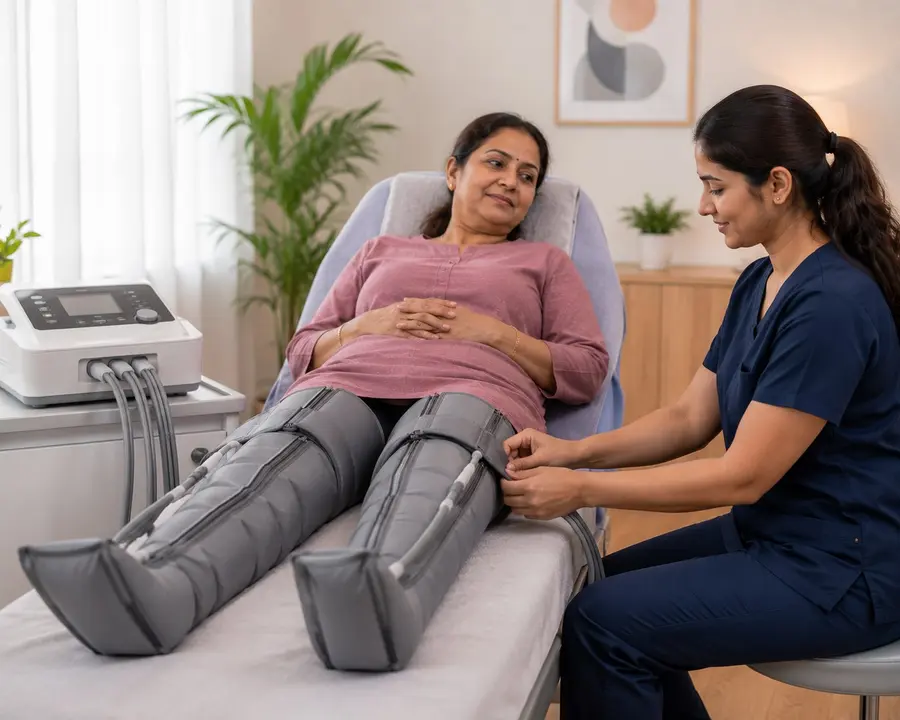
Medical-grade compression stockings are the most evidence-based conservative intervention for varicose veins — reducing symptoms and slowing progression when worn correctly.
- Correct compression grade selection (15–40 mmHg)
- Guidance on wearing schedule and duration
- Advice on fitting and care
- Monitoring response and adjusting grade over time
Varicose Veins FAQ
Yes — by improving calf muscle pump function. The calf muscles are responsible for pushing blood from the legs back toward the heart. When they are weak or inactive (from prolonged sitting or standing), venous pressure increases and varicosities worsen. Targeted calf strengthening and walking programs demonstrably reduce venous pressure and symptom severity.
For mild to moderate varicose veins, conservative management is the recommended first approach and is effective at controlling symptoms. Surgery (or laser/sclerotherapy) is recommended when veins are causing significant complications — bleeding, ulceration, thrombosis — or when conservative treatment has been completed and symptoms remain unacceptable. We help you avoid reaching that stage.
Yes. Pregnancy-related varicose veins are very common and very manageable conservatively. We use pregnancy-safe exercises, compression guidance, dietary advice, and appropriate acupuncture protocols (avoiding contraindicated points). Most pregnancy-related varicosities improve significantly after delivery with the right management.
Compression stockings during work, calf movement breaks every 30–45 minutes (ankle circles, heel raises), elevation of legs during rest periods, and proper footwear all significantly reduce the impact of prolonged standing. We design a specific protocol for your work schedule.
Manage Your Veins Before They Manage You
A consultation tells you exactly where you are and what a realistic conservative program looks like for your specific situation.