Diastasis Recti:
Closing the Gap, Restoring Your Core
That persistent tummy bulge after pregnancy — the one that doesn't shift no matter how much you exercise — is likely diastasis recti. Up to 60% of women develop abdominal muscle separation during or after pregnancy. The right rehabilitation closes the gap and rebuilds real core strength. The wrong exercises actively make it worse.
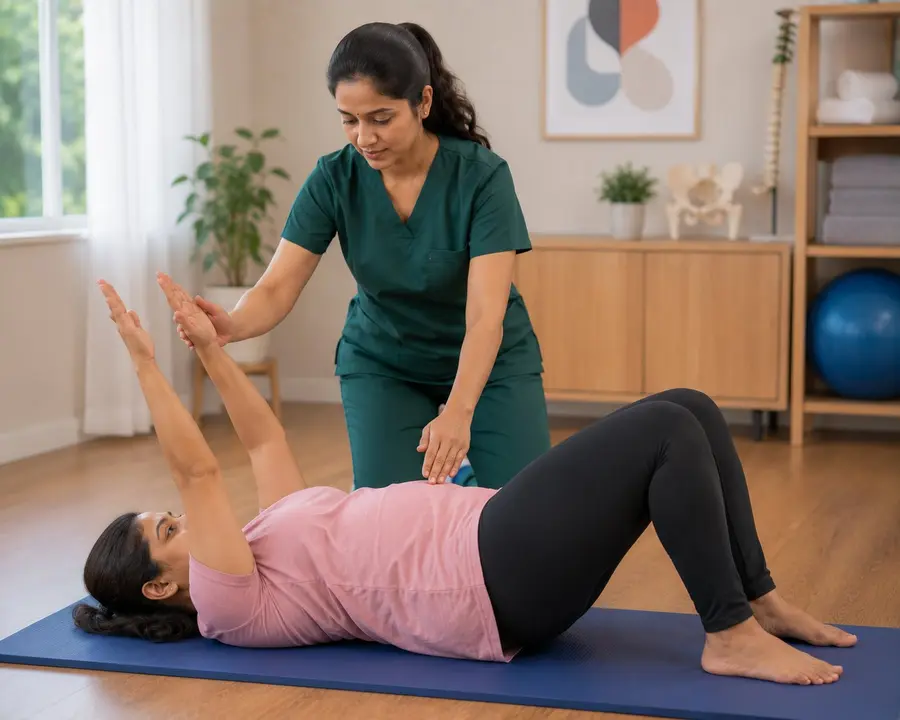
What Is Diastasis Recti?
The rectus abdominis muscles run down the centre of the abdomen, joined at the midline by connective tissue called the linea alba. During pregnancy, the growing uterus stretches this tissue, causing the two muscle bellies to separate — this is diastasis recti (DR).
A gap of more than 2 cm (roughly 2 finger-widths) is considered clinically significant. Left unaddressed, DR causes persistent lower back pain, poor posture, abdominal weakness, a visible "doming" or "coning" when you lift, and pelvic floor dysfunction. The good news: with the right program, the majority of cases improve significantly.
Common Misconceptions About DR
How We Treat Diastasis Recti
Our physiotherapists specialise in postpartum core rehabilitation. Treatment is staged — we begin with deep stabiliser activation before progressing to functional movement, ensuring the repair is genuine and lasting.
Diastasis Assessment
We measure gap width and depth, assess linea alba tension and function, and evaluate your whole-body movement patterns — not just the gap number.
Deep Core Activation
Retraining the transverse abdominis, diaphragm, and pelvic floor to work together — the foundation of all safe DR rehabilitation.
Corrective Exercise Program
A carefully graded program that closes the gap while building genuine core stability — modified based on your current stage and daily life demands.
Posture & Breathing Coaching
Many women breathe and hold themselves in ways that continuously stress the linea alba. We correct these patterns as part of rehabilitation.
Return to Exercise Guidance
Safe return to gym, yoga, running, and lifting — with clear guidance on what to progress when. No more guessing what's safe.
Online Coaching (NRI & Outstation)
Our complete DR program — assessment via video, guided exercise sessions, and weekly check-ins — available via Google Meet worldwide.
Diastasis Recti FAQ
Mild to moderate DR typically shows meaningful improvement within 8–16 weeks on average of consistent targeted rehab. Severe or long-standing cases may take 4–6 months. The goal isn't just closing the gap — it's restoring functional core strength, which takes consistent work.
Not at all. We regularly treat women who are years or even decades postpartum. The linea alba retains the ability to improve with the right loading and exercise — even if the gap has been present for a long time.
Yes — we will tell you exactly which exercises are safe, which need modification, and which to avoid. You don't have to stop moving; you need to move differently and progressively.
DR develops due to pregnancy, not delivery mode. C-section mothers can and do develop DR. Additionally, C-section scar tissue can affect deep core muscle function — we address both in our postpartum rehabilitation program.
Get a Proper Assessment First
A 15-minute assessment tells you exactly whether you have DR, how significant it is, and what your specific program should look like. Book a initial consultation at our Somajiguda clinic.
Looking for specialised pelvic rehabilitation?
Learn about our Female Pelvic Rehab Programme →