C-Section Recovery:
Heal Fully, Not Just Superficially
A large proportion of deliveries in India are by C-section — yet structured post-surgical rehabilitation is almost never offered. Being "cleared at 6 weeks" means the incision has healed. It doesn't mean your body has recovered. Scar adhesions, core disconnection, and pelvic floor dysfunction can persist for years without the right care.
What Happens Under the Surface
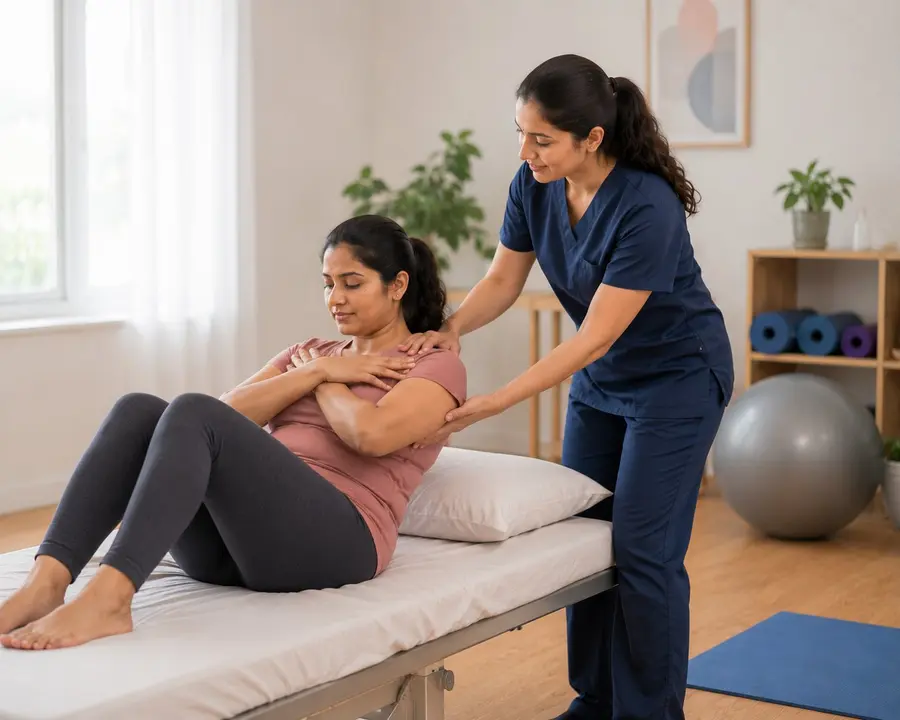
A C-section cuts through 7 layers of tissue — skin, fat, fascia, three layers of abdominal muscle, the uterine wall, and the uterine lining. Each layer heals independently, and when they stick to each other (scar adhesions), the result is a web of restricted tissue that affects posture, movement, bladder function, and pelvic floor mechanics.
Many women notice a shelf or overhang above the scar, tightness that stops them standing fully upright, numbness, and sensitivity along the scar line. These are signs of adhesions and tissue restriction — all highly treatable with targeted hands-on rehabilitation.
A Structured Recovery, Not Just Time
C-Section Scar Assessment
We evaluate scar mobility, adhesion depth, tissue quality, and functional impact on your core and pelvic floor before designing your program.
Scar Tissue Mobilisation
Gentle, hands-on techniques to release adhesions layer by layer, restore tissue glide, reduce numbness and sensitivity, and improve the scar's appearance.
Deep Core Reconnection
C-section cuts through core muscles, disrupting their neural connection. We use specific exercises to re-establish the brain-muscle pathway and rebuild genuine abdominal function.
Pelvic Floor Rehabilitation
Pregnancy affects the pelvic floor regardless of delivery mode. We assess and rehabilitate pelvic floor function as part of complete postpartum recovery.
Postural Restoration
Many C-section women adopt a protective forward-lean posture. We address spinal alignment, hip flexor tightness, and thoracic mobility for full postural recovery.
Return to Full Fitness
A structured, graded plan for returning to yoga, gym, running, or any activity — with clear milestones and the confidence that you're not re-injuring yourself.
What Recovery Looks Like with Rehabilitation
Week 6–8: Begin Scar Work
Scar is closed and ready for gentle mobilisation. Initial assessment, core breathing reactivation, and gentle scar desensitisation begins.
Month 2–3: Core Reconnection
Progressive deep core exercises, continued scar mobilisation, pelvic floor assessment and retraining, and postural correction begin in earnest.
Month 4–6: Functional Rebuilding
Return to low-impact activity, progressive loading of the core, and addressing any remaining restrictions in scar tissue or muscle function.
Month 6+: Full Return to Activity
Safe return to all activities including running, gym, and high-impact exercise — with a body that's genuinely recovered, not just healed on the surface.
C-Section Recovery FAQ
We begin gentle scar work at 6–8 weeks post-surgery, once the incision is fully closed and there is no redness or discharge. Before 6 weeks, we focus on breathing, gentle movement, and posture. The earlier you start after 6 weeks, the better — fresh scar tissue is more responsive than mature adhesions.
Yes. Mature scar tissue is denser and takes longer to respond, but it absolutely does respond to skilled manual therapy. Many women experience significant improvement in scar mobility, core function, and pain even years after their surgery.
Absolutely. Episiotomy scars, perineal tears, and vaginal delivery can all cause scar tissue restrictions and core dysfunction. Our postpartum rehabilitation program covers all delivery types.
Core reconnection exercises, posture coaching, breathing retraining, and follow-up programs are fully available online via Google Meet. Hands-on scar mobilisation requires in-person sessions, but the broader recovery program can be supported remotely.
Your Body Did Something Extraordinary
It deserves a proper recovery — not just time. Book a consultation at our Somajiguda clinic to understand what's actually happening in your body and what a full recovery looks like.
Looking for specialised pelvic rehabilitation?
Learn about our Female Pelvic Rehab Programme →